Saturday, July 9, 2016

From Winston Churchill to Tony Blair: How British Leaders Destroyed Iraq for over a Century


From Winston Churchill to Tony Blair: How British Leaders Destroyed Iraq for over a Century

Global Research, July 07, 2016
446 
 30 7 
 
 493
uk-flag
After seven years, the Chilcot report has delivered a damning verdict on Tony Blair’s role in the war on Iraq, but British Prime Ministers playing a destructive role in Iraq is a centuries old practice.
Britain has used its military might and commercial prowess to subjugate Iraq and control its oil resources for over one hundred years.
Churchill invented Iraq. The end of World War I left Britain and France in command of the Middle East and the allies carved up the region as the defeated Ottoman Empire fell apart. Winston Churchill convened the 1912 Conference in Cairo to determine the boundaries of the British Middle Eastern mandate. After giving Jordan to Prince Abdullah, Churchill, gave Prince Abdullah’s brother Faisal an arbitrary patch of desert that became Iraq.
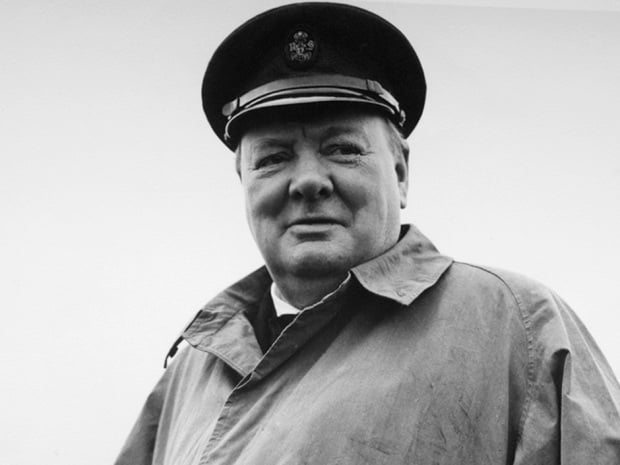
Historian Michael R. Burch recalls how the huge zigzag in Jordan’s eastern border with Saudi Arabia has been called “Winston’s Hiccup” or “Churchill’s Sneeze” because Churchill carelessly drew the expansive boundary after a generous lunch.
Churchill’s imperial foreign policy has caused a century of instability in Iraq by arbitrarily locking together three warring ethnic groups that have been bleeding heavily ever since. In Iraq, Churchill bundled together the three Ottoman vilayets of Basra that was predominantly Shiite, Baghdad that was Sunni, and Mosul that was mainly Kurd.
Britain set up a colonial regime in Iraq. British oppression in Iraq intensified and an uprising in May 1920 united Sunni and Shia against the British. Winston Churchill, the responsible cabinet minister, took almost a decade to brutally quash the uprising leaving 9,000 Iraqis dead.
Churchill ordered punitive village burning expeditions and air attacks to shock and awe the population. The British air force bombed not only military targets but civilian areas as well. British government policy was to kill and wound women and children so as to intimidate the population into submission.
Churchill also authorized the use of chemical weapons on innocent Iraqis.
In 1919 Churchill remarked, “I do not understand this squeamishness about the use of gas. I am strongly in favour of using poisoned gas against uncivilised tribes… It will cause great inconvenience and spread a lively terror”.
Churchill, saw Iraq as an experiment in aerial technological colonial control as a cheaper way to patrol the over-extended empire. Almost one hundred years since Churchill sought the use of aerial technology to cling onto influence over a restive Iraq, Blair’s government began flying deadly drones over Baghdad and Helmand Province in Afghanistan.
To Britain’s imperial Prime Ministers, aviation has always promised to be the trump card, the guaranteed way of keeping native peoples and their resources under control. Arthur “Bomber” Harris, who was to lead the aerial bombardment of Germany 20 years after bombing Iraq, boasted that he had taught Iraqis “that within 45 minutes a full-sized village can be practically wiped out and a third of its inhabitants killed or wounded”.
The British Royal Air Force maintained its military control over Iraq until World War II, even after Iraqi independence in 1932. Despite formal independence, British political and economic influence in Iraq barely receded.
Britain’s relationship with Iraq has always revolved around the issue of oil. Churchill viewed Iraq as an important gateway to Britain’s Indian colony and oil as the lifeblood for Britain’s Imperial Navy.
Britain established the Iraq Petroleum Company (IPC) as the vehicle through which Iraqi oil would be exploited. British Petroleum (BP), or the Anglo-Persian Oil Company as it was known back then, was also heavily involved in plundering Iraqi oil.
British oilmen benefited incalculably from Iraq’s puppet regime until the Iraqi masses rose up against British influence. This led to the Iraq revolution of 1958 and the rise and eventual Presidency of Saddam Hussein.
British and US intelligence helped Saddam’s Ba`ath Party seize power for the first time in 1963. Ample new evidence shows that Saddam was on the CIA payroll as early as 1959, when he was part of a failed assassination attempt against Iraqi leader Abd al-Karim Qassem. During the 1980s, the United States and Britain backed Saddam in the war against Iran, providing Iraq with weapons, funding, intelligence, and even biological and chemical weapons of mass destruction.
In 2003 the Guardian reported that a chemical plant, which the United States said was a key component in Iraq’s chemical warfare arsenal, was secretly built by Britain in 1985 behind the backs of the Americans. Documents show British ministers knew at the time that the $14 million dollar British taxpayer funded plant, called Falluja 2, was likely to be used for mustard and nerve gas production.
British relations with Saddam Hussein only began to sour when Hussein nationalized the Iraq Petroleum Company in 1972. As a result of Iraq’s oil revenues finally flowing directly into the Iraqi Treasury, the nation experienced a massive windfall when oil prices quadrupled in 1973.
The Iraqi nation grew increasingly wealthy, as oil revenues rose from $500 million in 1972 to over $26 billion in 1980, an increase of almost 50 times in nominal terms.
During the 1990’s, Britain supported severe economic sanctions against Iraq because of Saddam’s increasing resource nationalism. The United Nations estimated that 1.7 million Iraqis died as a result of the sanctions. Five hundred thousand of these victims were children.
The British and American sanctions on Iraq killed more civilians than the entirety of chemical, biological, and nuclear weapons used in human history.
Glaring similarities between Britain’s 1917 occupation of Iraq and the modern military debacle in Iraq are too salient to dismiss or to ignore.
They told us that Iraq was a nuclear threat; Iraq was a terrorist state; Iraq was tied to Al Qaeda. It all amounted to nothing. Since the 2003 invasion, hundreds of thousands of Iraqis have died and over a million have been displaced because of this lie.
Prior to 2003, Iraq had zero recorded suicide bombings. Since 2003, over a thousand suicide bombs have killed 12,000 innocent Iraqis.
Tony Blair recently admitted to CNN that the 2003 invasion of Iraq played a part in the rise of the Islamic State militant group, and apologized for some mistakes in planning the war.
It is important to note that Al Qaeda in Iraq did not exist prior to the British-American invasion and that terror organization eventually became ISIS.
Former British Foreign Secretary, Robin Cook, told the House of Commons that Al Qaeda was unquestionably a product of Western intelligence agencies. Mr. Cook explained that Al Qaeda, which literally means an abbreviation of “the database” in Arabic, was originally an American computer database of the thousands of Islamist extremists, who were trained by the CIA and funded by the Saudis, in order to defeat the Russians in Afghanistan.
Blair’s legacy in Iraq is ISIS. Blair has recently called ISIS the “greatest threat” faced by Britain.
Shortly after British general Stanley Maude’s troops captured Baghdad in 1917, he announced, “our armies do not come into your cities and lands as conquerors or enemies, but as liberators.”
Almost a century later in 2003 Tony Blair said, “Our forces are friends and liberators of the Iraqi people, not your conquerors. They will not stay a day longer than is necessary”.
History has a habit of repeating itself, albeit with slightly different characters and different nuances. Iraq may well go down in history as Britain’s greatest longstanding foreign policy failure.
Garikai Chengu is a scholar at Harvard University. Contact him on garikai.chengu@gmail.com

Crimes Against Peace: The Chilcot Inquiry, Tony Blair and Iraq

Crimes Against Peace: The Chilcot Inquiry, Tony Blair and Iraq

Global Research, July 07, 2016
15 
 5 1 
 
 23
25 Questions Chilcot Will Probably not Ask Tony Blair: an Irak Perspctive
Britain is in political turmoil, but even prior to that, there was that old problem of why Her Majesty’s government went to war in a disastrous conflict that had no immediate, security related grounds. The reasons for invading Iraq were more ideological than scientific, more evangelical than rational.
One of the greater evangelists in this mission of folly was former British Prime Minister Tony Blair. Britain may well have been in search of a role after empire, and here it was by way of redux, a traditional stomping ground in the Middle East.  The hope was also personal. Ego, and the desperate sense of purchasing goodwill in Washington, seemed to preoccupy Blair.
The result of going into Iraq in a fit of moral outrage and strategic bravado was disastrous. Actually, it was more than disastrous. Virtually every murderous spin off in the Middle East has its provenance in the disturbances of the Coalition of the bungling willing in 2003.
That war suggested much about what was wrong with the Anglosphere, with its various satraps and misguided assumptions.  The United States was charging into a bloody engagement hoping its not too questioning followers, the UK and Australia, would join in. They were right, with Blair giving a pre-determined commitment of British forces on July 28, 2002, a good deal prior to the formal Parliamentary vote on whether military intervention against Iraq was warranted.
Sir John Chilcot as Chairman of the Iraq Inquiry was hoping to do much. The inquiry, he hoped, would give us lessons that would “help ensure that, if we face similar situations in future, the government of the day is best equipped to respond to those situations in the most effective manner in the best interests of the country.”[1]
For all of that, the history of this inquiry is characterised by chronic, mind numbing delay.  Britain’s gift to the world was not merely a civil service but one of uncivil disservice when required.  Such pursuits have their own rationale and powers of justification.
While the inquiry’s process has been unsatisfactory, Chilcot’s findings are now the stuff of pure affirmation.[2]  There is noting new in it.  Iraq’s previously sponsored dictator Saddam Hussein posed no immediate threat to Western states in 2003. Peaceful options prior to the use of force, a grave decision in international relations, had not been exhausted.
When the UK Ministry of Defence had committed to the bloody effort, it found itself woefully underprepared. Its inventory was poor, lacking in essential equipment such as armoured patrol vehicles and helicopters.  The use of improvised explosive devices (IEDs), the great deliverer of asymmetrical warfare, was not taken seriously.
The rest of the stage for the day was set by Blair’s apologetics.  “The report,” claimed Blair in a statement, “should lay to rest allegations of bad faith, lies or deceit.” This is standard Blair: muddle the issue, obfuscate the finding.  Regard sorrow and faith as forgivable faults.
Conveniently missed is a vital fact: fanatical, uninformed belief has been the basis of some of history’s most blood sodden decisions. And to say that deception was not part of it is to misread the report, which notes the desire on the part of President George W. Bush and Blair, to invade for reasons of regime change.
Few ever go to wars, legal or otherwise, without faith.  That hardly constitutes grounds for letting planners of the hook.  Crimes against peace, articulated by the Nuremberg International Military Tribunal, are arguably the gravest of crimes. Whatever the faulty evidence, the diplomatic option or a continued strategy of containment, none of these mattered with a decision taken well in advance, a common plan of aggression.
Blair did make a feeble attempt to comb through the minute details by way of exoneration.  In an attempt to appease the British public, and his God, he asserts that Chilcot did not find “falsification or improper use of Intelligence (para 876 vol 4).”  He notes the finding that he did not deceive Cabinet (para 953 vol 5) and claims that Chilcot found against a “secret commitment to war whether at Crawford Texas in April 2002 or elsewhere (para 572 onwards vol 1).” There are lies, and then there are lies.
One can sense Blair’s relief that the inquiry did not make a finding on one of the most fundamental points that would make a prosecutor’s brief stick: whether the action to attack Iraq was itself legal.  He makes much hay out of the point of a “finding” by the Attorney-General that there was a lawful basis by March 13, 2003 for possible military action (para 933 vol 5).  On that score, Chilcot could have done much more.
Blair then gives us his reflection about consequences, which sound all too much like a defence before a future criminal tribunal – as well as it might.  He accepts the errors of his administration, treating them like desk job miscalculations, only to then claim that it was perfectly right to remove Saddam.  Forget the “underestimated” consequences, as Chilcot rather blandly calls them.
Furthermore, he continues in his refusal to accept that “the cause of terrorism we see today whether in the Middle East or elsewhere in the world” had anything to do with this adventurous gamble.  Object and belief trumped procedure and execution.  Such reasons are as good any for a formal conviction.
Dr. Binoy Kampmark was a Commonwealth Scholar at Selwyn College, Cambridge.  He lectures at RMIT University, Melbourne. Email: bkampmark@gmail.com

Saturday, July 2, 2016

e Collapse of Wes tern DemocracyBy Dr. Paul Craig Roberts


The Collapse of Wes

tern DemocracyBy Dr. Paul Craig Roberts

Global Research, July 01, 2016
Paul Craig Roberts 29 June 2016
Region: EuropeUSA
752 
 36 14 
 
 837
democracy
Democracy no longer exists in the West. In the US powerful private interest groups, such as the military-security complex, Wall Street, the Israel Lobby, agribusiness and the extractive industries of energy, timber and mining, have long exercised more control over government than the people. But now even the semblance of democracy has been abandoned.
In the US Donald Trump has won the Republican presidential nomination. However, Republican convention delegates are plotting to deny Trump the nomination that the people have voted him. The Republican political establishment is showing an unwillingness to accept democratic outcomes.
The people chose, but their choice is unacceptable to the establishment which intends to substitute its choice for the people’s choice.
Do you remember Dominic Strauss-Kahn? Strauss-Kahn is the Frenchman who was head of the IMF and, according to polls, the likely next president of France. He said something that sounded too favorable toward the Greek people. This concerned powerful banking interests who worried that he might get in the way of their plunder of Greece, Portugal, Spain, and Italy. A hotel maid appeared who accused him of rape. He was arrested and held without bail. After the police and prosecutors had made fools of themselves, he was released with all charges dropped. But the goal was achieved. Strauss-Kahn had to resign as IMF director and kiss goodbye his chance for the presidency of France.
Curious, isn’t it, that a woman has now appeared who claims Trump raped her when she was 13 years old.
Consider the political establishment’s response to the Brexit vote. Members of Parliament are saying that the vote is unacceptable and that Parliament has the right and responsibility to ignore the voice of the people.
The view now established in the West is that the people are not qualified to make political decisions. The position of the opponents of Brexit is clear: it simply is not a matter for the British people whether their sovereignty is given away to an unaccountable commission in Brussels.
Martin Schultz, President of the EU Parliament, puts it clearly: “It is not the EU philosophy that the crowd can decide its fate.”
The Western media have made it clear that they do not accept the people’s decision either. The vote is said to be “racist” and therefore can be disregarded as illegitimate.
Washington has no intention of permitting the British to exit the European Union. Washington did not work for 60 years to put all of Europe in the EU bag that Washington can control only to let democracy undo its achievement.
The Federal Reserve, its Wall Street allies, and its Bank of Japan and European Central Bank vassals will short the UK pound and equities, and the presstitutes will explain the decline in values as “the market’s” pronouncement that the British vote was a mistake. If Britain is actually permitted to leave, the two-year long negotiations will be used to tie the British into the EU so firmly that Britain leaves in name only.
No one with a brain believes that Europeans are happy that Washington and NATO are driving them into conflict with Russia. Yet their protests have no effect on their governments.
Consider the French protests of what the neoliberal French government, masquerading as socialist, calls “labor law reforms.” What the “reform” does is to take away the reforms that the French people achieved over decades of struggle. The French made employment more stable and less uncertain, thereby reducing stress and contributing to the happiness of life. But the corporations want more profit and regard regulations and laws that benefit people as barriers to higher profitability. Neoliberal economists backed the takeback of French labor rights with the false argument that a humane society causes unemployment. The neoliberal economists call it “liberating the employment market” from reforms achieved by the French people.
The French government, of course, represents corporations, not the French people.
The neoliberal economists and politicians have no qualms about sacrificing the quality of French life in order to clear the way for global corporations to make more profits. What is the value in “the global market” when the result is to worsen the fate of peoples?
Consider the Germans. They are being overrun with refugees from Washington’s wars, wars that the stupid German government enabled. The German people are experiencing increases in crime and sexual attacks. They protest, but their government does not hear them. The German government is more concerned about the refugees than it is about the German people.
Consider the Greeks and the Portuguese forced by their governments to accept personal financial ruin in order to boost the profits of foreign banks. These governments represent foreign bankers, not the Greek and Portuguese people.
One wonders how long before all Western peoples conclude that only a French Revolution complete with guillotine can set them free.
Dr. Paul Craig Roberts was Assistant Secretary of the Treasury for Economic Policy and associate editor of the Wall Street Journal. He was columnist for Business Week, Scripps Howard News Service, and Creators Syndicate. He has had many university appointments. His internet columns have attracted a worldwide following. Roberts’ latest books are The Failure of Laissez Faire Capitalism and Economic Dissolution of the WestHow America Was Lost, and The Neoconservative Threat to World Order.

Saturday, June 25, 2016

"دعاء الفيلسوف الهندي طاغور"

دعاء الفيلسوف طاغور


"دعاء الفيلسوف الهندي طاغور"

يارب ساعدني على ان اقول الحق في وجه الأقوياء
وساعدني على ألا اقول الباطل لأكسب تصفيق الضعفاء
يارب، إذا اعطيتني مالاً فاحفظني من شرّه
واذا اعطيتني قوّة فامنحني نوراً ساطعاً لعقلي
واذا اعطيتني نجاحاً فاعطني معه تواضعا.ً
يارب ساعدني على ان ارى نواحي الخير كلّها، 
ولا تتركني اتهم خصومي بالشر، لأنهم ليسوا من رأيي
يارب، علّمني ان احب الناس كما احببتني
وعلمني ان أُحاسِب نفسي دون ان أدين الناس

-2-

يارب، لا تدعني أُصاب بالغرور إذا نجحت
ولا أُصاب باليأس إذا فشلت
يارب، علمني ان التسامح هو اسمى مراتب القوّة
وان حب الأنتقام هو اول مظاهر الضعف
يارب، إذا جرّدْتَني من المال، فاترك لي الأيمان
وإذا جرّدْتَني من النجاح، اترك لي الأمل
وإذا جرّدْتَني من نعمة الصحة، اترك لي نعمة التعزية
يارب، إذا أسأتُ الى الناس، اعطني شجاعة الأعتذار،
وإذا اساء إلَيَّ الناس، اعطني شجاعة العفو
يارب، إذا نسيتُكَ لا تنسني.